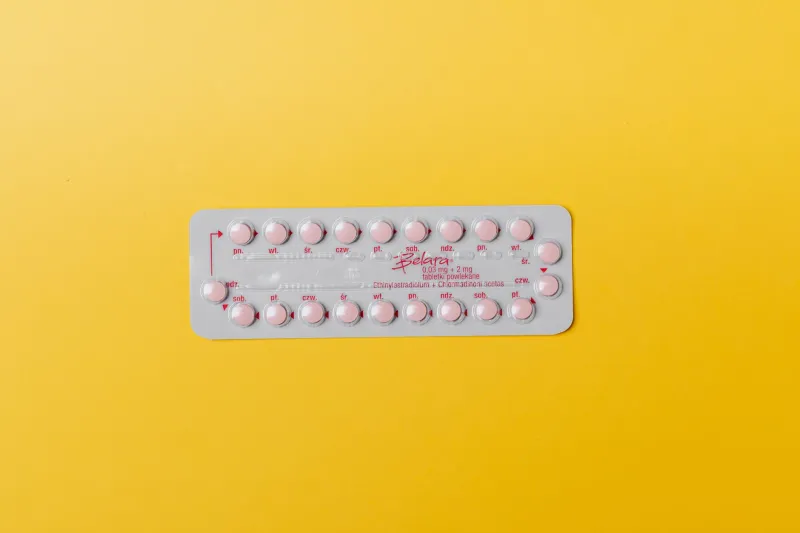
Big Pharma's 'Savings' Cards Are a Shell Game — And Your Uterus Is Paying the Price

You've probably seen them. A slick little card tucked into a doctor's office brochure, or a pop-up on the website of whatever brand-name birth control your OB-GYN just prescribed. "Pay as little as $0 this month!" "Save up to $150 on your first fill!" It feels like winning. It is not winning.
Those manufacturer savings cards and rebate programs are one of the most misunderstood financial instruments in American healthcare — and for people managing their reproductive health on a budget, falling for the pitch can cost real money in the long run. Let's break down exactly how this shell game works, who's actually benefiting, and what you can do to stop subsidizing a system that was never designed with your bank account in mind.
The Coupon That Isn't Really a Coupon
When a pharmaceutical company hands you a savings card for a brand-name contraceptive — let's say a newer progestin-only pill or a hormonal patch with a splashy ad campaign — they're not doing it out of generosity. They're doing it because their drug has a generic competitor, or will soon, and they need to keep you loyal to the brand.
Here's the mechanics: the manufacturer sets an artificially high list price for the drug. Your insurance negotiates a rebate with the manufacturer behind closed doors — a kickback, essentially, for keeping the drug on their formulary. Meanwhile, your out-of-pocket cost is technically calculated against that inflated list price. The savings card covers the gap for now, making you feel like you're getting a deal. But that rebate money the insurer collects? It rarely flows back to you. It flows to the insurer's bottom line, or at best, gets spread across the entire risk pool in ways that don't meaningfully lower your premiums.
The net effect: the brand-name drug stays artificially expensive, generics get squeezed out of the conversation, and you become dependent on a coupon that can disappear the moment the manufacturer decides it's no longer strategically useful.
The Formulary Trap Nobody Explains at the Pharmacy Counter
Here's where it gets thornier. Many insurance plans use tiered formularies — essentially a ranked list of drugs, where lower tiers mean lower copays. Brand-name contraceptives with big rebate arrangements sometimes land on better formulary tiers than their generic equivalents, purely because the manufacturer is paying the insurer to be there.
This means your plan might actually charge you less for the brand-name pill than the generic one, at least on paper. Add a savings card on top, and the brand looks like an obvious financial choice. But what happens when your plan changes, your employer switches insurers, or the manufacturer quietly discontinues the savings program? Suddenly you're paying full tier-two or tier-three rates on a drug whose list price was inflated to begin with.
Generic birth control, by contrast, is boring in the best possible way. It doesn't have a marketing budget. Nobody's handing out savings cards for it. But it works the same way, it's FDA-approved to be bioequivalent, and at a pharmacy like Mark Cuban's Cost Plus Drugs or through GoodRx on a cash-pay basis, many generic oral contraceptives run between $10 and $30 a month — no insurance required, no coupon expiration date, no strings attached.
The ACA's Promise vs. the Rebate Reality
Under the Affordable Care Act, most insurance plans are required to cover FDA-approved contraceptive methods without cost-sharing. That sounds like it should make all of this moot, right? Except the implementation has always had gaps. Insurers can require you to try a generic before approving a brand. They can exclude specific formulations. And the rebate system operates beneath the surface of what the ACA regulates, meaning even when you're technically getting 'free' birth control, the financial machinery underneath is still churning in ways that shape which options your doctor even knows to offer you.
Physicians, for their part, are often influenced by pharmaceutical sales reps who highlight the savings card programs as a selling point. A well-meaning doctor might genuinely believe they're doing you a favor by prescribing the brand with the coupon. They're not always wrong in the short term. But they're also not thinking about what happens to your contraceptive access and your budget when that coupon evaporates.
What You Can Actually Do About It
Navigating this system is annoying, but it's not hopeless. A few practical moves:
Ask for the generic by name. When your provider writes a prescription, specifically request the generic equivalent. If there isn't one yet, ask whether a therapeutically similar generic option exists. Most hormonal contraceptives have multiple formulations that work comparably.
Price-shop before you fill. Use GoodRx, RxSaver, or Cost Plus Drugs to compare cash prices at multiple pharmacies before you hand over your insurance card. Sometimes the cash price with a discount code is dramatically lower than your copay — especially for generics.
Don't let a savings card dictate your method. If you're considering a brand-name option primarily because of a manufacturer coupon, ask yourself: what's my plan B (no pun intended) when this offer ends? Make sure the underlying drug is something you could afford or access through other means.
Talk to your insurer about formulary exceptions. If a specific contraceptive method works best for your body and it's not on your plan's preferred tier, you have the right to request a formulary exception with your doctor's support. It's a bureaucratic pain, but it's an option.
Consider telehealth for prescriptions. Platforms like Wisp, Nurx, and others often have relationships with pharmacies that offer generic contraceptives at flat, transparent rates — cutting out some of the formulary complexity entirely.
Your Dollars Deserve Better
At Birth Control Bank, we talk a lot about the real cost of reproductive healthcare — not just the sticker price, but the hidden fees, the systemic incentives, and the ways the system nudges you toward choices that benefit everyone except you. The coupon economy around brand-name contraceptives is a perfect case study in how 'savings' can be a marketing strategy dressed up as a public health benefit.
You deserve birth control that actually fits your body and your budget — not a method you're locked into because a pharmaceutical company's savings card made it feel like the smart choice. Follow the money. Ask the questions. And remember: the most expensive contraceptive is the one you stop taking because you can't afford it anymore.