Write-Offs, FSAs, and the IRS: How to Make Your Birth Control Work for Your Tax Return

Let's be honest — nobody hands you a tax guide when your OB-GYN prescribes the pill. You walk out with a prescription, maybe a co-pay receipt, and absolutely zero information about how that purchase might affect your refund come April. That's a problem, because the IRS has a lot of opinions about contraception — they just don't advertise them.
The financial relationship between birth control and your taxes is messier, more nuanced, and frankly more interesting than most people expect. Depending on what method you use, how you pay for it, what you earn, and where you get your coverage, you could be sitting on legitimate tax advantages you've never claimed — or unknowingly tripping over rules that cost you.
Let's break it down.
The Baseline: Is Birth Control Tax-Deductible at All?
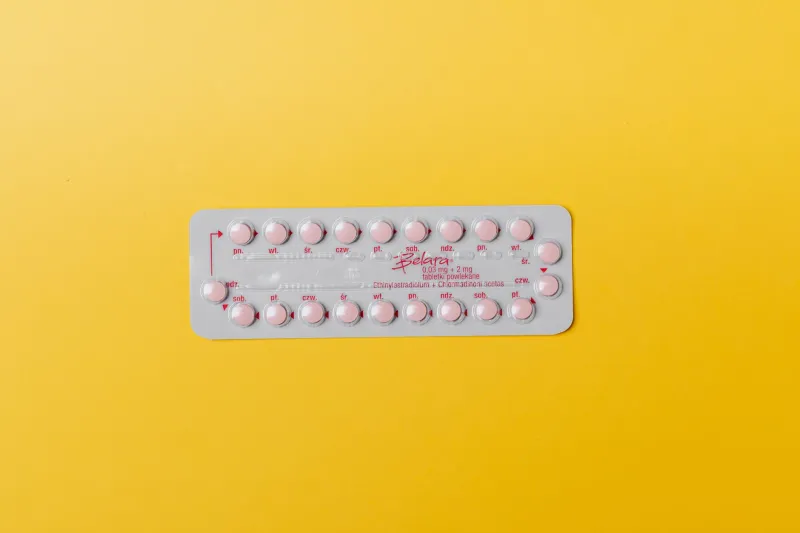
Short answer: sometimes, yes. The IRS allows you to deduct qualified medical expenses that exceed 7.5% of your adjusted gross income (AGI) if you itemize deductions. Prescription contraceptives — the pill, the patch, the ring, injectable methods like Depo-Provera — are generally considered qualified medical expenses under IRS Publication 502.
Here's the catch: most people don't itemize anymore. After the 2017 Tax Cuts and Jobs Act nearly doubled the standard deduction, the vast majority of American filers take the standard deduction instead. If that's you, those out-of-pocket birth control costs don't move the needle on your federal return through direct deduction.
But that doesn't mean the tax code has nothing to offer you. It just means you need to play a different game.
FSAs and HSAs: The Real Contraception Tax Break
Flexible Spending Accounts (FSAs) and Health Savings Accounts (HSAs) are where the actual leverage lives for most people. Both allow you to set aside pre-tax dollars to pay for qualified medical expenses — and yes, most prescription contraceptives qualify.
Here's why this matters in real dollars: if you're in the 22% federal tax bracket and you use an FSA to cover $600 in annual birth control costs, you're effectively saving around $132 in federal taxes alone. Add state income tax savings on top of that in most states, and the number climbs.
What's FSA/HSA eligible?
- Prescription contraceptives (pill, patch, ring, injectable)
- IUDs (hormonal and copper) — including the insertion procedure
- Implants like Nexplanon — device and insertion
- Emergency contraception like Plan B or Ella
- Condoms (yes, really — this changed with the CARES Act in 2020)
- Diaphragms and cervical caps
- Spermicide
That last few items are worth emphasizing. Over-the-counter contraceptives became FSA/HSA eligible without a prescription starting in 2020. That's a meaningful shift that a lot of people still don't know about.
What's NOT eligible:
- Fertility treatments aimed at getting pregnant (different category entirely)
- Non-medical wellness products that happen to affect reproduction
If your employer offers an FSA, and you're not maxing it out with predictable annual contraception costs, you're essentially paying a tax on your birth control that you don't have to pay.
The Long-Game Math: IUDs, Implants, and Lump-Sum FSA Timing
One underrated FSA strategy involves long-acting reversible contraceptives (LARCs) like IUDs and implants. These methods can cost anywhere from $500 to over $1,000 out-of-pocket without insurance — but they last for years.
Here's the FSA quirk that works in your favor: most FSAs front-load your entire annual election on January 1st, even though your contributions come out of each paycheck throughout the year. That means you can elect $1,000 into your FSA in January, use all of it immediately to cover a Mirena or Paragard insertion, and then leave your job in March — and you won't owe back the money you already spent, even though your contributions hadn't caught up yet.
That's not a loophole. That's literally how FSAs work. And it's a financially savvy move that reproductive health advocates rarely talk about.
HSAs work differently — you can only spend what you've actually contributed — but they have their own advantage: the money rolls over indefinitely. If you're on a high-deductible health plan and contribute to an HSA, stashing pre-tax dollars there to cover a LARC in a future year is a completely legitimate strategy.
Income, Subsidies, and the Contraception Cost Cliff
Here's where things get thornier. For people who purchase insurance through the ACA marketplace, your premium tax credits are based on your income relative to the federal poverty level. This creates what's sometimes called the "subsidy cliff" — earning even a few hundred dollars more than a threshold can dramatically reduce the premium assistance you qualify for.
Why does this matter for birth control? Because the method you choose affects your total healthcare spending, which affects whether you hit your deductible, which affects whether you're better off on a lower-premium high-deductible plan versus a richer plan. If you use a LARC that's covered at 100% under the ACA's preventive care mandate, you might actually be better served by a leaner, cheaper plan than someone who needs ongoing monthly prescription fills.
In other words: your contraception method isn't just a health decision. It interacts with your insurance tier choice, which interacts with your premium tax credit, which shows up on your Form 8962 at tax time. These decisions are connected in ways that most people — and frankly, most insurance navigators — don't walk through with you.
The ACA Mandate and What It Actually Covers
Under the Affordable Care Act, most insurance plans are required to cover FDA-approved contraceptive methods without cost-sharing. That means no co-pay, no deductible — $0 out of pocket. When that coverage works as intended, there's nothing to deduct and nothing to run through an FSA, because you're not paying anything.
But as we've covered elsewhere on this site, that mandate has more holes in it than a chain-link fence. Employer religious exemptions, grandfathered plans, and the ongoing legal battles over preventive care coverage mean that plenty of people are still paying out of pocket for methods that should be free.
If you're in that situation — paying for contraception that your plan should cover — you have even more reason to route those costs through an FSA or HSA, and to keep meticulous records in case the deductible medical expense route ever becomes relevant.
Practical Moves You Can Make Right Now
- Enroll in your employer's FSA during open enrollment and calculate your expected annual contraception costs to inform your election amount.
- Check if your over-the-counter contraceptives are being paid with pre-tax dollars — if you're buying condoms or emergency contraception with a regular debit card, you're overpaying.
- If you're considering a LARC, look at your FSA election calendar and plan the timing to maximize the front-loading benefit.
- If you're on marketplace insurance, run the numbers on plan tiers against your actual contraception usage before defaulting to the cheapest premium.
- Keep receipts. Even if you don't need them this year, medical expense documentation has a habit of becoming useful.
The Bottom Line
The tax code wasn't written with reproductive autonomy in mind. But it does contain real, usable tools that can put money back in your pocket based on how you manage contraception costs. The frustrating part is that nobody tells you this — not your doctor, not HR, not the insurance company.
That's what we're here for. Your birth control is a healthcare decision first. But it's also a financial one, and you deserve to make it with complete information.